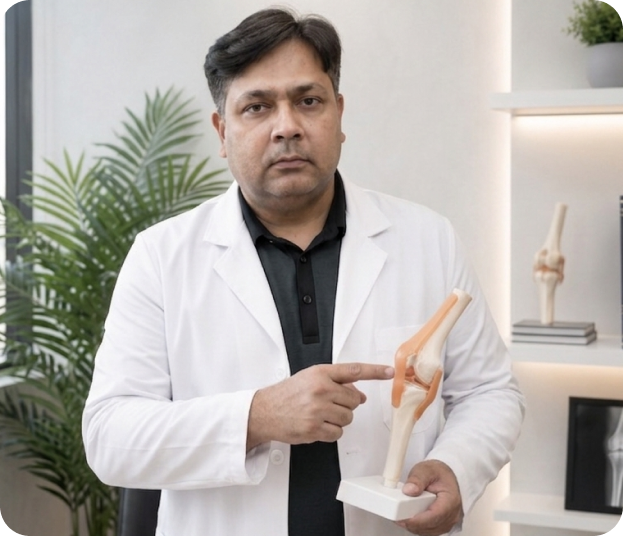
Dr. Maqsood Akhtar is an acclaimed and honored physician, holding distinguished medical credentials at the national and international levels. This denotes his dedication to providing the finest orthopedic treatment to all patients.
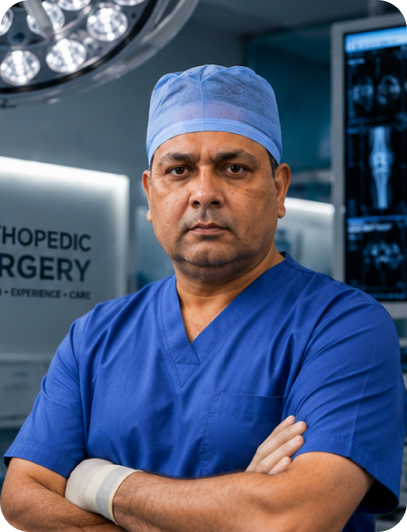
Dr. Maqsood Akhtar is the orthopedic surgeon who makes people feel independent and confident again by treating their bone and joint problems. He possesses more than 20 years of experience in the diagnosis and treatment of bone and joint diseases. He is an MBBS and FCPS specialist in the field of Orthopedic Surgery. During his practice, he worked in many famous hospitals and orthopedic departments.
Patients can easily get all types of orthopedic services, including arthroscopy, sports medicine, knee replacement surgery, fracture management, minimally invasive orthopedic surgery, ACL injury treatment, and orthopedic physiotherapy. Moreover, Dr. Maqsood Akhtar is also certified in Advanced Trauma Life Support (ATLS) principles through the Golden-Hour Management of Trauma – The ATLS Way course. The internationally acknowledged training gives Dr. Maqsood Akhtar the ability to make fast decisions that can save the lives of his patients in case of severe fractures, multiple injuries, and other orthopedic emergencies.
With a wide range of specialties, Dr. Maqsood Akhtar is capable of formulating a treatment plan according to the patient’s individual problem and lifestyle. He understands that a knee injury is not just limited to affecting a body part but stops the patient from continuing their job, their sports, and their household duties. Be it youngsters who want to come back to playing cricket or adult men and women who wish to have stability in their knees, each one is treated with honesty, proper counseling, and affectionate care.

Islamia University Bahawalpur


Orthopedic
surgeon
services institute of medical sciences
primary trauma
care foundation
College of Physicians and Surgeons

Advanced Trauma Life Support (ATLS)
One of the minimally invasive procedures in arthroscopy is an ACL reconstruction surgery, where the damaged ACL is replaced with a healthy one. Various types of ligaments stabilize the knee joint, one of which is called the Anterior Cruciate Ligament (ACL). In the case where the ACL gets torn, the knee joint will experience instability and pain, resulting in difficulty in carrying out daily activities. This could be due to:
In most cases, ACL Tear surgery in Lahore is the best way to treat ACL injuries. Dr. Maqsood Akhtar’s ACL knee surgery procedure is extremely advanced, and he utilizes state-of-the-art arthroscopic technology. Instead of using an open incision to perform the procedure, he makes use of a tiny camera along with specialized surgical instruments. This allows accurate positioning of the graft while leaving the healthy tissues around the area untouched. The outcome of such a procedure is minimal pain after surgery, minimal bleeding, absence of any infection, and a quick healing process. The timely ACL repair surgery will prevent your knees from developing problems related to meniscus injury and early osteoarthritis.
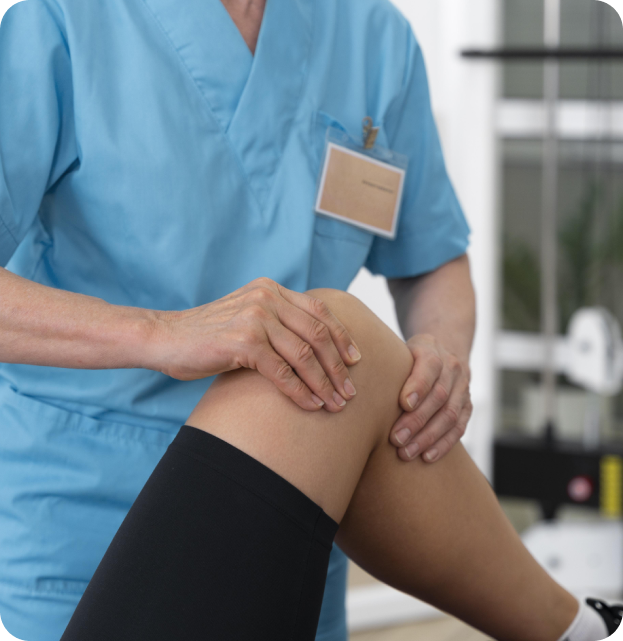
Most people ignore their early warning signs and walk on the affected knee without knowing how much damage it is doing. Early diagnosis of the signs and ACL injury treatment helps prevent more harm to the knee. The following symptoms indicate a damaged ACL:
Overlooking such warnings while having an unstable knee means that the thigh bone will glide without control on the shin bone, thus tearing the cartilage that is supposed to protect the bones from injuries. It leads to premature joint degeneration.
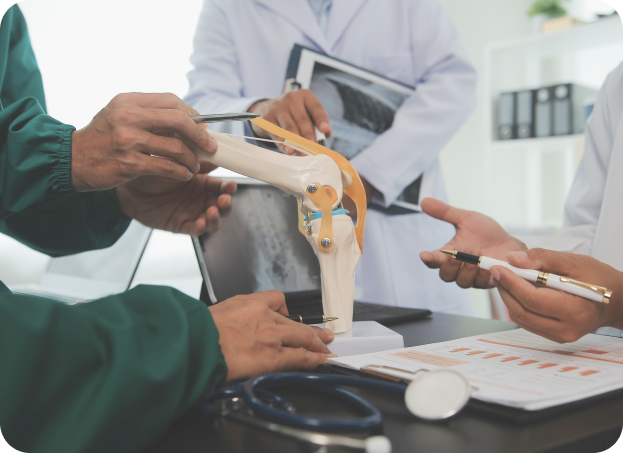
The choice of the right orthopedic specialist will have a considerable influence on the success of the operation. Here is why patients choose Dr. Maqsood Akhtar for knee care:
Nothing can be more reassuring than listening to patients whose lives we helped change. These are just a few personal testimonials about Dr. Maqsood Akhtar’s services.

“A fall on the stairs made my knee weak to an extent that even taking small steps would make it buckle. Luckily, Dr. Maqsood Akhtar did my ACL tear surgery and made sure that my whole experience was seamless. The procedure was done in a very professional manner, and each visit thereafter assured me that I was recovering well. Today I have resumed my daily activities without any pain in my knee.”

Tariq Mahmood, Lahore
“I had kept putting off treatment of my knee because of my fear about extensive surgery and recovery time, which exceeded a year. As soon as the pain became intolerable, I consulted Dr. Maqsood Akhtar. His forthright attitude and the clear information about keyhole ACL repair surgery made me choose him at once. It was a great success, and the service of his whole team was top-notch. My knee is feeling brand new. I am really thankful for the professional attitude and courtesy.”

Hamza Bilal, Lahore
“Being a football player, getting injured with an ACL injury seemed a total disaster. Dr. Maqsood Akhtar not only performed an advanced ACL reconstruction surgery on my knee but was with me through the whole process of rehabilitation during the next months, stressing safety in the graft healing process. Words can’t express how much I am grateful to him for saving my sports career.”
Hira S. - Sheikhupura
“Though I had consulted many doctors prior to Dr. Maqsood Akhtar, he was the only one who gave me sincere advice. He addressed all of my queries and made it clear to me what kind of treatment could be performed on me.”
Saima Riaz, Lahore
The successful outcome after ACL knee surgery is 50% good surgery and 50% rehabilitation. Dr. Maqsood Akhtar offers a detailed rehabilitation plan, which is divided into milestones, so that you will be aware of all of the changes taking place in your recovery process.
Comprehensive 6-Stage Recovery Timeline
| Recovery Phase | Time Frame Post-Surgery | Clinical Expectations & Rehabilitation Focus |
|---|---|---|
| Phase 1: Initial Healing & Protection | Weeks 1 – 2 | Focus on reducing swelling and managing pain. You will use a supportive knee brace and crutches for light weight-bearing. Gentle exercises begin to achieve full knee extension (straightening) and basic quadriceps contraction. |
| Phase 2: Mobility & Normal Gait | Weeks 3 – 6 | Gradual weaning off crutches as leg control improves. Knee flexion (bending) reaches 120+ degrees. Daily walking becomes smooth without a limp, and light stationary cycling is introduced to improve joint movement. |
| Phase 3: Muscle Strengthening | Months 2 – 3 | Full weight-bearing without braces or crutches. Focused resistance training begins to rebuild quadriceps, hamstrings, and gluteal muscle mass. Exercises include bodyweight squats, leg presses, and balance board stability work. |
| Phase 4: Advanced Conditioning | Months 4 – 5 | Proprioception (balance) and neuromuscular control are fully optimized. Introduction of higher-impact cardiovascular training, light jogging on flat surfaces, and lateral agility drills under physical therapy supervision. |
| Phase 5: Sports-Specific Drills | Months 6 – 8 | Transition into non-contact sports training. Plyometrics, sprinting, cutting, and jumping drills are reintroduced. Functional movement testing ensures the operated knee has achieved equal strength compared to the uninjured leg. |
| Phase 6: Full Return to Activity | Months 9 – 12 | Clearance for full, unrestricted athletic participation and competitive contact sports. Graft tissue has fully integrated and matured into a strong, natural structural ligament capable of handling intense physical stress. |
Keep in mind that everyone recovers differently. The progress you make during the treatment period will be constantly monitored by Dr. Maqsood Akhtar in order to provide you with the best possible rehabilitation plan.
You Are a Good Candidate for ACL Surgery if You:
ACL Surgery Is Not Recommended if You:
The most appropriate way to diagnose the condition and determine if you need an ACL reconstruction or conservative management is via a thorough evaluation with Dr. Maqsood Akhtar. All advice will be based on your specific condition, thus giving you the correct treatment tailored to you.
Surgery is not needed for all cases of ACL tear. It all depends on how severe the injury is, your lifestyle, and how fit you are overall. The best treatment is selected after a thorough evaluation done by Dr. Maqsood Akhtar during the consultation.
The idea of going through joint surgery might seem daunting, but with the help of our step-by-step approach, your whole experience with our specialist will be clear, smooth, and totally stress-free.
In the case of ACL surgery cost in Pakistan, it is crucial to remember that all money invested in knee surgery directly goes towards ensuring your mobility for life, independence, and working capability without pain. The price of ACL surgery in Lahore depends on the following medical factors: the selection of hospital, the choice of high-end surgical fixation implants used, the requirement of meniscal repair, and the post-operative hospital stay.
The philosophy of Dr. Maqsood Akhtar is to provide honest and affordable medical treatment to patients. Instead of making compromises and suggesting cheap options, which may lead to graft failure, or making expensive packages, we always ensures that every patient receives a premium level of arthroscopic surgery at reasonable prices. Although price is an important factor for each family in Pakistan, making compromises in terms of skills and surgical implant quality may cause recurring joint problems and expensive revision surgeries.
Being diagnosed with a torn ACL shouldn’t keep you from enjoying your life. The very fact that you live another day with an unstable knee makes things worse for your joint cartilage and brings you one step closer to being a sufferer of joint pain. Thanks to arthroscopic procedures and advanced techniques, it has become easier than ever before to regain the full strength of your knee. Dr. Maqsood Akhtar will treat knee problems and help you live an independent and pain-free life like before.
Since the Anterior Cruciate Ligament lies in the fluid-filled joint space in the knee, torn ligament ends will not mend themselves due to no direct blood supply to them. Non-surgical physical therapy won’t be able to restore physical stability in case of a complete ligament tear.
Patients typically resume office duties and walking in about 2 to 3 weeks after their operation. High impact activities may resume in about 6 to 9 months.
Preparation will start with “prehabilitation”, which is exercise performed on the recommendation of Dr. Maqsood Akhtar in order to minimize swelling and increase muscle strength in the legs before surgery.